Super Lawyers
Justia Lawyer Rating
Million Dollar Advocates Forum
AVVO
AVVO
The American Board Of Certification:
Martindale-Hubbell

By Josh Johnson

Most of the time when a person is injured in a vehicle accident, that person will have to deal with one or more insurance companies. The insurance companies will then assign an adjuster to the claim. The adjusters analyze the claim for fault and damages. Most of the time, the very first document an adjuster reviews, whether from the injured party’s insurance company or the person at fault’s insurance company, is the police report. The police report is also heavily analyzed by the attorney retained by the insurance company if a lawsuit is filed. It is very important to provide the responding police officer with accurate information about the accident, including any pain or discomfort that the injured person may be having.

Call Racine Olson

I was injured in a motor vehicle collision that was not my fault. My insurance company paid for my medical bills and now they are telling me that they have a right of subrogation in my claim against the at-fault party. What does that mean?

Subrogation is the substitution of one party for another whose debt the party pays, entitling the paying party to rights, remedies, or securities that would otherwise belong to the debtor. Said otherwise, pursuant to the language which is probably in your insurance policy, when your insurance company paid your medical bills and those bills were incurred due to the negligence of another, your insurance company has the right to be paid back. The insurance company can sue the at-fault party seeking reimbursement or alternatively, they can obtain recovery through you in your claim/lawsuit against the at-fault party. When the at-fault party (or their insurance company) pays you to resolve the claim, a portion of those proceeds will need to go to your insurance company unless your insurance company agrees to waive all or a portion of their subrogation rights.

Blog Post Provided By:

By Fred Lewis and George Casper

This post is relatively simple to comprehend: The Idaho Industrial Commission has the exclusive right and duty to assess fault in cases that are tied to worker’s compensation claim. There are many previous cases and many entries in the Idaho Code that highlight this truth. Here are a few examples:

  • Idaho Code 72-707 states, “All questions arising under this law [about who has fault]… shall be determined by the commission”. This law also states the Industrial Commission has exclusive jurisdiction of all questions arising under worker’s compensation law; this includes subrogation claims.

By Pat George

As everyone in Idaho knows, a person must wear a seat belt whenever a vehicle is in motion because they will protect you if you are involved in any car accident. However, the Idaho Legislature just made this law even more important. Recently, the Idaho Legislature enacted a statute that could have a large impact on a person who has not used a seat belt and is injured in a car accident. If the failure to wear the seat belt caused the injuries to be more severe than they would have been had the injured person been wearing a seat belt, that evidence can be admitted. This would reduce the injured person’s recovery. The moral of this story is that seat belt is more important than ever.

Call Racine Olson

By Fred Lewis and Gorge Casper

Determining the payout of a Idaho workers’ compensation cases that occur at work and are the result of negligence by a third party can be very complicated. Cases where a third party is responsible for the injury suffered by the worker are generally severe. When medical bill payments are coupled with the large disability payments workers get from these types of injuries because of their extended (sometimes permanent) time away from work, the subrogated claim can often be hundreds of thousands of dollars. Injured workers need as much of the settlement money they can get because they can more often than not no longer find work that pays even half of what they were making before their accident. They need this settlement money to support their families.

Before joint and several liability was abolished in 1987, the injured employee could collect 100% of the tort damages from the negligent third party, but was subject to deduction for his or her own negligence. A credit was also given to the third party for any workers compensation benefits paid by the employer’s insurance company. For example, if a claimant was awarded $1,000,000 in the third party case, and the third party was found to be 60% negligent, the employer 30% negligent and injured worker was found to be 10% negligent (a deduction of $50,000), the injured worker would receive $900,000 from the third party, with a deduction for workers compensation benefits paid .

By Fred Lewis and George Casper

Picture this. You get into a car accident and the other motorist is found to be negligent. You file a lawsuit in order to have the other motorist’s insurance pay for any vehicle damages, lost wages, medical bills and pain and suffering. You find out that the other motorist has an insurance policy that only covers up to $25,000 (the legal minimum) of damages that result from an accident. Your damages, wage losses, and medical bills amount to over $400,000 dollars. What do you do in order to get the rest of your claim paid for?

Unfortunately, the scenario described above happens all too often. Underinsured motorist’s can leave drivers on the wrong end of a car accident with feelings of anger and frustration. In order to prevent these feelings, make sure that you check your own auto insurance policy and see what the limits are for car accidents with underinsured drivers. Buy as much underinsured coverage as you can reasonably afford. It is one of the best insurance values available.

By Fred Lewis and George Casper

In Idaho Worker’s Compensation cases where the injury is partially caused by a third party (resulting in two separate lawsuits), there is a big misconception that one can gain a cash settlement that is larger than the actual value of the case. Some argue that workers with legitimate third party claims can hit the lawsuit lottery if they are able to sue multiple entities at the same time. This is simply not the case. The type of recovery described above is called a “double recovery” in the legal world and expressly prohibited. In order to protect against a double recovery for an injury, the ruling court (in the case of a Worker’s Compensation case, this would be the Idaho Industrial Commission) will make sure that there is no double recovery. This basically means that the employer’s insurance company would lose their chance at reimbursement of their subrogated claim (what they have paid in medical bills and disability benefits) if the employers is found negligent. The only exception to this would be if the worker’s compensation benefits and the benefits won in the third party case add up to be more than the actual value of the case.

In order to better illustrate exactly what would constitute a double recovery, here is an example:

By Pat George

A recent study shows that 40% of U.S. drivers will doze off while their driving at some point in their lives. This fact is frightening not just for drivers across the country, but right here in Idaho. In fact, in 2009 there were 563 car accidents due to drowsy driving. Driving drowsy is just as dangerous as drunk driving since fatigue slows reaction time and impairs judgment.

Its important to report those drivers that you suspect are impaired while driving whether this is due to alcohol or fatigue. This protects you, your loved ones, and all of us in Idaho.

By: Fred Lewis and George Casper

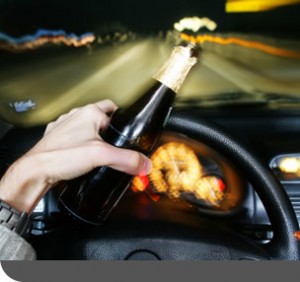
Driving under the influence of alcohol or other drugs is a serious issue for today’s motorists. It is one of the main causes for car accidents in the United States. In 2013 alone, over 32,000 people were killed in alcohol-related car accidents. Thousands of others have suffered serious personal injury. If you are involved in an automobile accident with somebody who has had one, two, or ten drinks too many, you need to seek legal action against that driver.

drivingIf you do decide to bring suit against an impaired driver (you’d be misguided not to), it is important to know where the person was drinking. According to Idaho Code 23-808, the business selling the alcohol to the drunk driver can be indicted as a co-contributor to the car accident under dram shop liability. Dram shop law states that liability can be thrust upon establishments that provide alcoholic beverages if they sell drinks to visibly intoxicated persons or minors who subsequently cause death or injury to third parties not associated with the establishment. Dram shop can be especially useful if the drunk driver who caused the car accident is either underinsured or uninsured.

By: Fred Lewis and George Casper

It is widely said that there are two certainties in life: death and taxes. This statement is incorrect. There are actually three certainties in life: death, taxes, and car accidents. Ever since Henry Ford created an assembly line able mass produce his Model-T at an affordable price for all middle-class Americans, there have been car accidents. There are, on average, about 10 million car accidents a year in the United States. This figure includes every type of car accident from the minor scrape to the colossal, car-totaling catastrophes that generally result in personal injury. It is said that the average person gets into 3 to 4 automobile accidents in their driving lifetime, so why increase the chances by using a cell phone while driving? Most everyone knows that using a cell phone while driving is dangerous, but still do it anyways. This is especially true for the younger population, whom consider their cell phone to be their lifeline to society.

A study conducted in 2006 by David Strayer, Frank Drews, and Dennis Crouch on the effects of operating a cell phone while driving found drivers using cell phones “actually exhibit greater impairments (i.e., more accidents and less responsive driving behavior) than legally intoxicated drivers.” To put this in perspective, the most recent traffic safety data found that 32,719 people died from alcohol-impaired driving crashes in the United States. The phrase “using cell phones” includes taking phone calls, texting, and using hands-free technology. Texting was found to be the most dangerous from of cell phone use for fairly obvious reasons. The Idaho State Legislature enacted Idaho Code 49-1401A in 2012 in order to ban texting while driving.

Contact Information