 Idaho Law Blog













 How often have you traveled behind a truck, trailer or pick-up and witnessed an unsecured load dumping debris, large items, household items or even large pieces of furniture onto the roadway? The U.S. Department of Transportation estimates that at 55 mph, an object weighing 20 pounds strikes with an impact of half a ton when it falls from a vehicle.
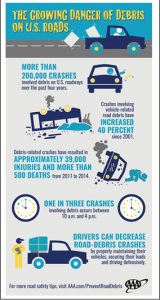
As indicated by the pictorial above, the AAA Foundation’s national study found that between 2011 and 2014, unsecured loads and road debris caused 200,000 crashes, 39,000 injuries and more than 500 deaths. Motorists need to be aware of the consequences and dangers of hauling unsecured items. No matter how fast your speed or how long (or short) your trip may be, all items in a load must be properly strapped down and securely anchored. Even at slow to moderate speeds, heavy items can become loose during an abrupt stop or from other unanticipated road conditions.
Additionally, big rig truck tires often shed debris from badly worn or underinflated tires which is left on the highway. On congested roadways, motorists have little time to react creating a recipe for disaster. ITD crews consider it a top priority to clean up and alleviate debris thrown from big rigs to avoid crashes.
 The nationwide non-profit public safety program “Operation Lifesaver” was implemented to raise awareness and promote education to keep citizens safe at train crossings. The program began in Idaho in 1972. Each year the Idaho State Police (ISP) conducts its “Cops on Trains” to spend the day patrolling railroad crossings and stop motorists who try to drive past lowered crossing gates and/or around barriers.